A Muslim-Friendly Bali Travel Itinerary: Seminyak to Ubud Route
- Access to vetted halal restaurants and private chefs.
- Selection of private pool villas ensuring complete privacy.
- Itineraries featuring alcohol-free activities and prayer-friendly schedules.
The air in Seminyak hangs heavy and sweet with the scent of frangipani and salt. It’s the first sensory note of Bali, a prelude to an island that moves at its own, graceful rhythm. From my suite at a private villa just off Jalan Petitenget, the distant, gentle hum of the ocean is a constant companion. This isn’t just another island getaway; it’s a meticulously crafted experience, one where modern luxury and Islamic principles coexist beautifully. For the Muslim traveler, Bali has long been a question mark—a Hindu-majority island paradise famed for its beach clubs and nightlife. But a new, more refined current is flowing through its tourism landscape, revealing a Bali that is not only accommodating but truly welcoming. This is the journey we’ll take: a seamless route from the sophisticated shores of Seminyak to the verdant, spiritual core of Ubud, all through the lens of world-class, halal-conscious travel.
Seminyak: Coastal Sophistication with Halal Finesse
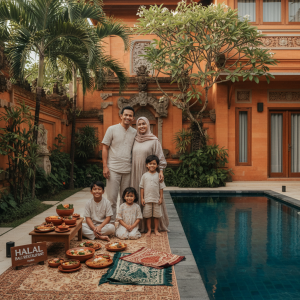
Your arrival at Ngurah Rai International Airport (DPS) is the beginning of a tailored experience. A private driver, arranged by our concierge, awaits to whisk you the 10 kilometers to Seminyak, a journey that typically takes around 30 minutes. Forget the chaos of airport taxis; this is about ease and discretion from the moment you land. We bypassed the sprawling resorts for a private-pool villa, a sanctuary walled for absolute privacy. In Bali, the villa is king, and for the Muslim family, it is non-negotiable. Properties like The Samaya Seminyak or the exclusive villas managed by The Layar offer not just seclusion but a level of personalized service that anticipates your needs. Before our arrival, I had requested prayer mats and a marked qibla direction; they were already in place in the master suite. Our villa manager, a soft-spoken man named Wayan, mentioned that these requests have increased by nearly 40% in the last two years. “We understand privacy is the ultimate luxury,” he told me. “For our guests from the Middle East and Southeast Asia, this means ensuring the pool is not overlooked and that our in-villa dining menu is fully halal.” This is the new standard of service, a detail that defines the exceptional halal bali tourism experience. The first evening is for settling in, perhaps with an in-villa dinner of Ayam Taliwang, a spicy grilled chicken dish from neighboring Lombok, prepared by a private chef who sources ingredients from certified halal suppliers. It’s an introduction to the island’s flavors without a moment of uncertainty.
The Art of Slow Travel: Curated Experiences in Canggu
Just a 20-minute drive north of Seminyak, the vibe shifts. Canggu, once a sleepy surf town, now pulses with a creative, wellness-focused energy. While it’s known for its digital nomad scene, it also offers a wealth of experiences perfect for a Muslim-friendly itinerary. We dedicated a day to exploring this area, moving beyond the obvious. Instead of a crowded beach, we arranged a private surf lesson at Echo Beach with a certified female instructor. The cost, around IDR 800,000 for a two-hour one-on-one session, is an investment in a unique and empowering experience. The afternoon was spent away from the coast, exploring the workshops of local artisans. In a small, family-run studio, we watched silversmiths craft intricate jewelry, a tradition passed down through generations. This is the kind of authentic interaction that elevates a trip from a simple vacation to a cultural immersion. Lunch was at The Shady Shack, a popular vegetarian and vegan restaurant where every dish is inherently halal-friendly and spectacularly fresh. Their Nasi Campur, a vibrant platter of plant-based Balinese specialties, is a testament to the island’s rich produce. This slower, more intentional approach to travel is a cornerstone of the services we design. Our Halal Bali Tourism Concierge specializes in these unique arrangements, understanding that luxury for our clients often means exclusive access and meaningful, private encounters rather than just five-star ratings.
The Spiritual Ascent: Journeying North to Ubud
The transition from the coast to Bali’s interior is a journey in itself. The 35-kilometer drive to Ubud is not a simple transfer but a deliberate, scenic immersion into the island’s soul. As our private vehicle climbed, the urban hum of Seminyak faded, replaced by a tapestry of emerald rice paddies and traditional villages. The traffic, a well-documented feature of Balinese life, means the trip can take up to 90 minutes, but we used this time to our advantage. We planned a stop in the village of Mas, renowned for its master woodcarvers. Here, we visited the workshop of a fifth-generation carver, whose family has been supplying intricate panels to temples and royal palaces for over a century. He explained the philosophy behind the craft, the deep connection to Hindu mythology, and the patience required to transform a block of teakwood into a work of art. This respectful engagement with the local culture is essential. As noted by Indonesia’s official tourism portal, Bali’s culture is a living, breathing entity, and understanding its nuances enriches the visitor’s experience immeasurably. The air grows cooler and cleaner as you approach Ubud. The landscape is dominated by the monumental scale of the rice terraces, an ancient system of cooperative irrigation. This is the Bali of post-cards, yet seeing it unfold in real-time is a profound experience, setting a contemplative tone for our stay in the island’s spiritual heartland.
Ubud: A Sanctuary for the Soul, Tailored for Muslim Travelers
Ubud operates on a different frequency. It is a place of wellness, art, and quiet contemplation. Here, luxury is defined by tranquility and a connection to nature. We chose to stay at Mandapa, a Ritz-Carlton Reserve, which descends into the Ayung River valley, offering unparalleled privacy and serenity. The resort’s ability to cater to specific dietary needs is exemplary. Every menu, from the riverside dining at Sawah Terrace to in-villa breakfast, had clearly marked halal options, and the chefs were on hand to discuss any concerns. This is a level of service that defines the bespoke Muslim-friendly tours we champion. Our days were structured around gentle exploration. We visited the Tegallalang Rice Terraces at sunrise, before the crowds descended. The IDR 25,000 entrance fee is a small price for the view of the cascading paddies, a masterpiece of agricultural engineering. This intricate irrigation network, known as the subak system, is so culturally significant that it was designated a UNESCO World Heritage site in 2012. An afternoon was spent at a local coffee plantation, where we learned about the process of making Bali’s famous coffee. We made sure to inquire about the Luwak coffee production, ensuring the process was ethical and the final product free from any non-halal elements. The plantation also produced an array of herbal teas and spices, offering a fragrant window into the island’s botanical wealth. Each evening, we returned to our villa, a sanctuary where the only sounds were the flow of the river and the gentle chorus of nature.
Culinary Discoveries: Ubud’s Halal Gastronomy Scene
One of the greatest pleasures of this journey was discovering the depth and sophistication of Ubud’s halal dining scene. It has evolved far beyond simple warungs offering grilled chicken. Today, it’s a vibrant landscape of fine dining and innovative cuisine. A highlight was dinner at Bale Udang Mang Engking, where we dined in private bamboo pavilions set over a sprawling fish pond. Their signature honey-grilled prawns were exquisite. This is where you come for an authentic, family-friendly experience that feels both traditional and upscale. For a more modern take, we visited The Sayan House, which, while not exclusively halal, has a Japanese-Latin fusion menu with numerous seafood and vegetarian options. Their staff was incredibly knowledgeable about preparation methods, happily accommodating our request to ensure no cross-contamination with non-halal items. The true gem, however, was a private cooking class arranged through our villa. A Balinese chef, Ibu Made, guided us through the creation of a traditional feast, including Sate Lilit (minced fish satay wrapped around lemongrass stalks) and Pepes Ikan (spiced fish steamed in banana leaves). She explained how to create the foundational spice paste, basa gede, using all-local ingredients. This hands-on experience, costing around IDR 1,200,000 per person, was invaluable. Our comprehensive halal restaurant guide details dozens of such vetted options, ensuring every meal is a discovery, not a compromise.
Quick FAQ on Your Muslim-Friendly Bali Itinerary
Are mosques easily accessible in Seminyak and Ubud? While Bali is over 80% Hindu, mosques are present. In the south, Masjid Agung Ibnu Batutah in Nusa Dua and several mosques in Denpasar are the largest. Near Seminyak, Masjid Al-Fattah in Kuta is accessible. In Ubud, the small but welcoming Masjid Al-Huda serves the local Muslim community. However, the true convenience lies in luxury accommodations, as nearly all high-end villas and hotels readily provide prayer mats and qibla direction upon request, making daily prayers seamless within your private space.
What is the best time of year to visit Bali? The dry season, from April to October, offers the most pleasant weather with less humidity and rain. For Muslim travelers seeking tranquility, I recommend the shoulder months of May, June, and September. This allows you to avoid the peak tourist influx of July and August and major holidays like Christmas or the post-Ramadan rush, when domestic travel surges. During these shoulder months, you can often find villa rates that are 15-25% lower than in peak season.
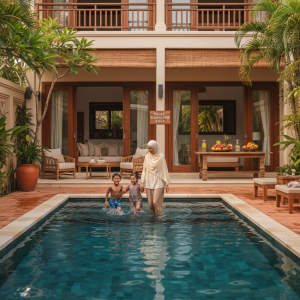
How can I ensure my villa is truly private for swimming? This is a critical detail. When booking, you must specify a ‘private pool villa with high walls’ or a ‘garden villa’ not overlooked by other buildings or public paths. This is where working with a specialist service is invaluable. For instance, our own Halal Bali Tourism Concierge personally vets properties, using satellite imagery and on-site inspections to confirm their privacy credentials, a level of due diligence you won’t get from a standard booking platform. According to data from the Bali Tourism Promotion Board, villa rentals constitute over 30% of luxury stays, making this a well-understood requirement.
Is it difficult to find modest clothing and swimwear? Not at all. The local Balinese dress, the sarong and kebaya, is inherently modest and elegant. In tourist areas, dress codes are very relaxed and accepting. For swimming, private villa pools eliminate any concerns. For water activities, bringing your own burkini or full-coverage swimwear is recommended, and you will feel perfectly comfortable. Major malls in Kuta and Denpasar also have international department stores like Matahari or Sogo where you can find a range of swimwear options if needed.
A journey through Bali, from the polished coastline of Seminyak to the serene highlands of Ubud, reveals an island of profound beauty and surprising adaptability. It proves that world-class luxury and deeply held faith do not have to be mutually exclusive. With careful planning and insider knowledge, Bali transforms into a welcoming sanctuary for the Muslim traveler, offering private villas, exquisite halal cuisine, and experiences that nourish the soul. Crafting a journey that honors both your spiritual needs and your desire for exceptional travel requires expertise. It is more than just a vacation; it is a statement that you can explore the world without compromising your values. Let the Halalbalitourism Collective design your perfect escape. Explore our curated villas and tours and begin your journey with our dedicated halal bali tourism team today.